Question 1
visual composition · core
Compare the two original images. An accessible description is provided with the image.
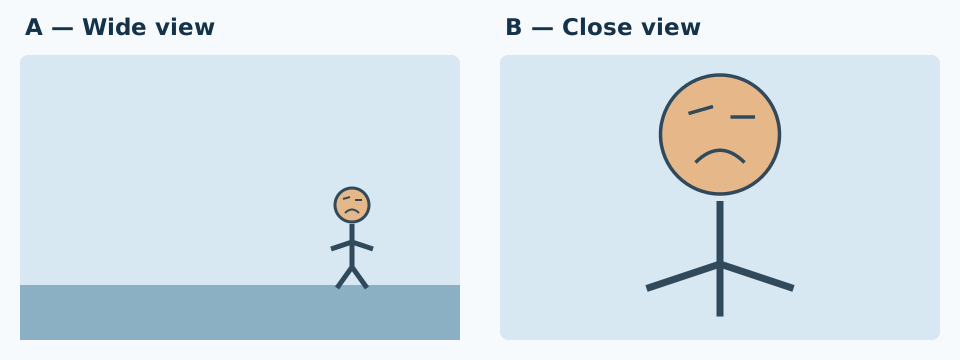
Which view makes the character's facial expression easier to examine?
VC2E4LA09 · VC2E4LY09
Pi Leo Academy · Year 4 English
13 questions and practical tasks · Victorian Curriculum English Version 2.0 · Level 4 · VC2E4LA09
Questions only — answer key not included.
Circle one option for multiple-choice questions. Use the response spaces or extra paper for longer work.
Name: ________________________________ Date: __________________
visual composition · core
Which view makes the character's facial expression easier to examine?
VC2E4LA09 · VC2E4LY09
visual composition · core
What does the wide view help the viewer notice?
VC2E4LA09 · VC2E4LY09
visual composition · core
Which statement is an interpretation supported by View A?
VC2E4LA09 · VC2E4LY09
visual composition · core
What changes between the two views?
VC2E4LA09 · VC2E4LY09
visual composition · core
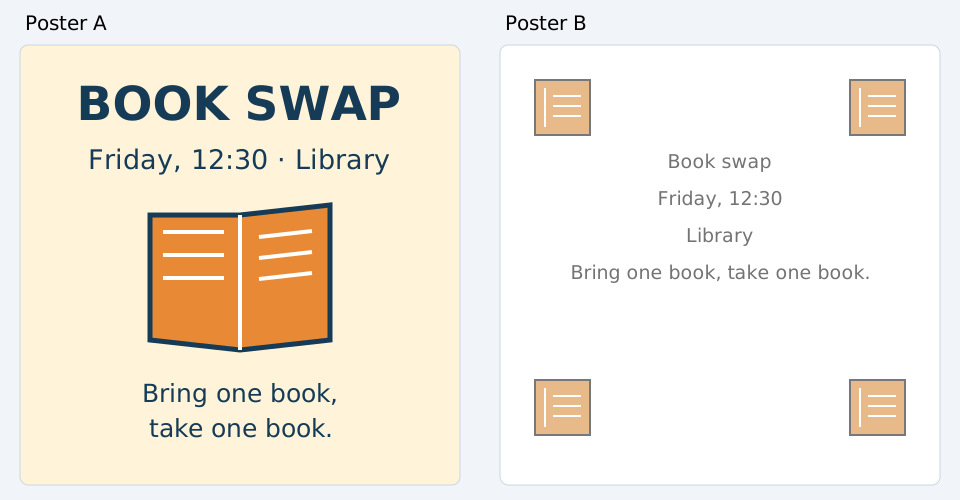
Which feature of Poster A makes the event name noticeable first?
VC2E4LA09 · VC2E4LY09
visual composition · core
Why might Poster A be easier to read quickly from a distance?
VC2E4LA09 · VC2E4LY09
visual composition · core
What job does the large book illustration do in Poster A?
VC2E4LA09 · VC2E4LY09
visual composition · core
Which judgement compares the posters using visual evidence?
VC2E4LA09 · VC2E4LY09
moving images and sound · extension
Use the three numbered panels; the dot moves once for five seconds, with a static fallback for reduced motion. You can trace the sequence with a finger at any time. For sound tasks, an adult or partner supplies the specified quiet taps/clap at a comfortable volume; no recording is required.
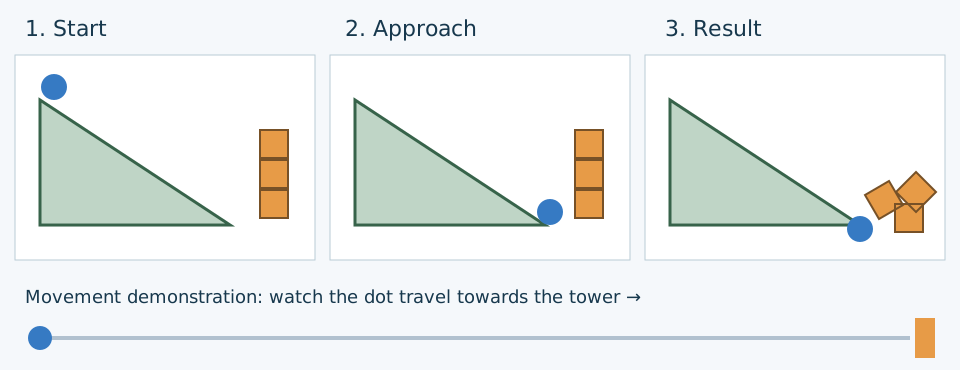
On paper: follow the numbered panels and trace the ball’s path with your finger. For sound comparisons, the adult supplies the sounds while you trace the same path.
Watch the dot make one five-second movement, or follow the three panels if reduced motion is enabled. Explain how position changes show the sequence without needing a paragraph of narration.
Response or adult observation notes:
VC2E4LA09 · VC2E4LY09
moving images and sound · extension
Use the three numbered panels; the dot moves once for five seconds, with a static fallback for reduced motion. You can trace the sequence with a finger at any time. For sound tasks, an adult or partner supplies the specified quiet taps/clap at a comfortable volume; no recording is required.
On paper: follow the numbered panels and trace the ball’s path with your finger. For sound comparisons, the adult supplies the sounds while you trace the same path.
A film could begin with a close view of the ball or a wide view of the whole ramp and tower. Explain what each opening would reveal and which you would choose to help a new viewer understand the setup.
Response or adult observation notes:
VC2E4LA09 · VC2E4LY09
moving images and sound · extension
Use the three numbered panels; the dot moves once for five seconds, with a static fallback for reduced motion. You can trace the sequence with a finger at any time. For sound tasks, an adult or partner supplies the specified quiet taps/clap at a comfortable volume; no recording is required.
On paper: follow the numbered panels and trace the ball’s path with your finger. For sound comparisons, the adult supplies the sounds while you trace the same path.
Ask an adult to tap slowly while pointing to panel 1, then tap faster while following the moving dot towards the tower. Watch once with these sounds and once silently. Describe how sound changes your expectation.
Response or adult observation notes:
VC2E4LA09 · VC2E4LY09
moving images and sound · extension
Use the three numbered panels; the dot moves once for five seconds, with a static fallback for reduced motion. You can trace the sequence with a finger at any time. For sound tasks, an adult or partner supplies the specified quiet taps/clap at a comfortable volume; no recording is required.
On paper: follow the numbered panels and trace the ball’s path with your finger. For sound comparisons, the adult supplies the sounds while you trace the same path.
Make two sound versions of panel 3: one soft tap and one sudden louder clap. Keep the drawing the same. Explain how the two versions change the apparent size or force of the event.
Response or adult observation notes:
VC2E4LA09 · VC2E4LY09
moving images and sound · extension
Use the three numbered panels; the dot moves once for five seconds, with a static fallback for reduced motion. You can trace the sequence with a finger at any time. For sound tasks, an adult or partner supplies the specified quiet taps/clap at a comfortable volume; no recording is required.
On paper: follow the numbered panels and trace the ball’s path with your finger. For sound comparisons, the adult supplies the sounds while you trace the same path.
Imagine enlarging only the tower in panel 2 and making the other elements pale. Explain how that would change the viewer's attention before the fall.
Response or adult observation notes:
VC2E4LA09 · VC2E4LY09