
Number
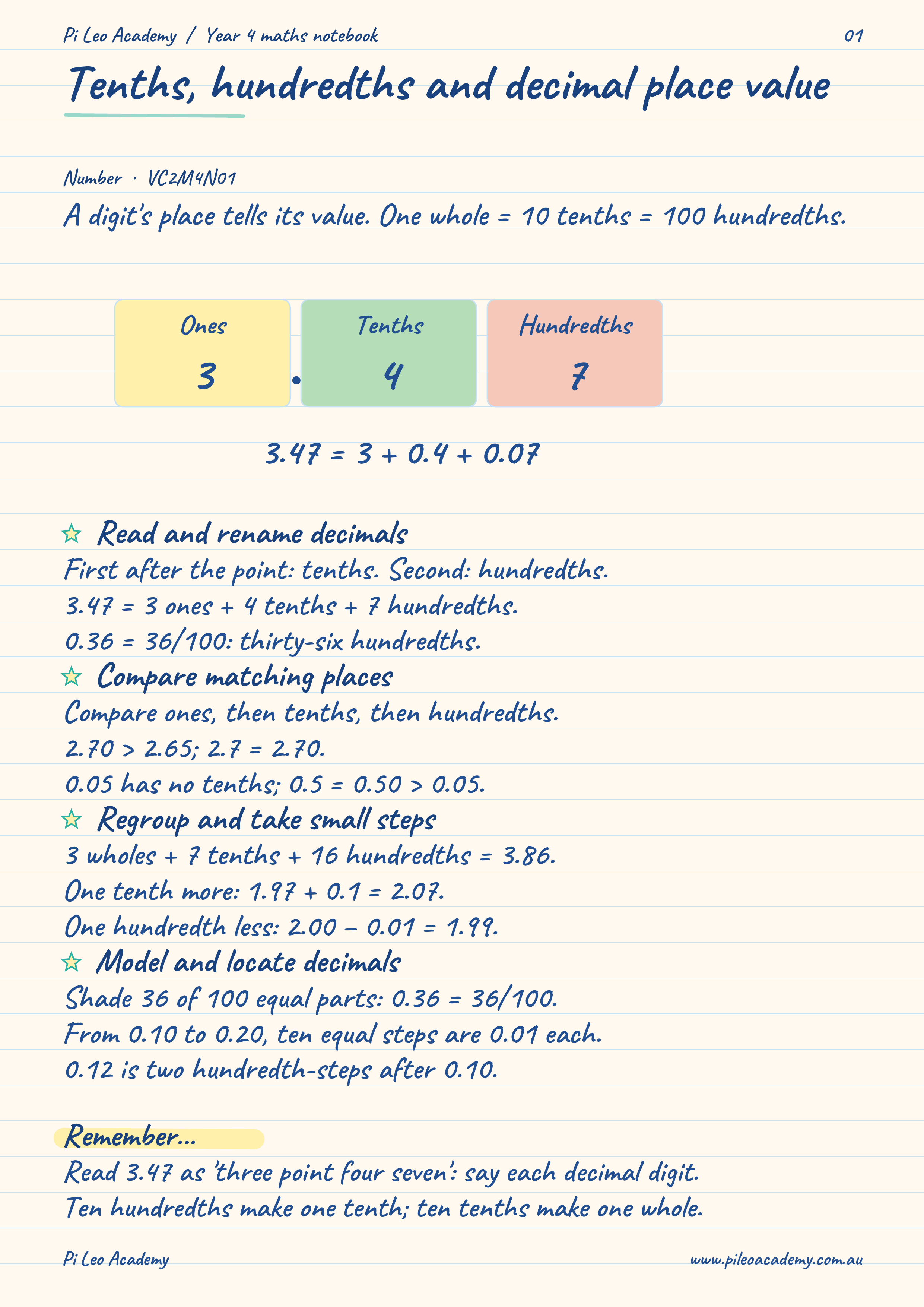
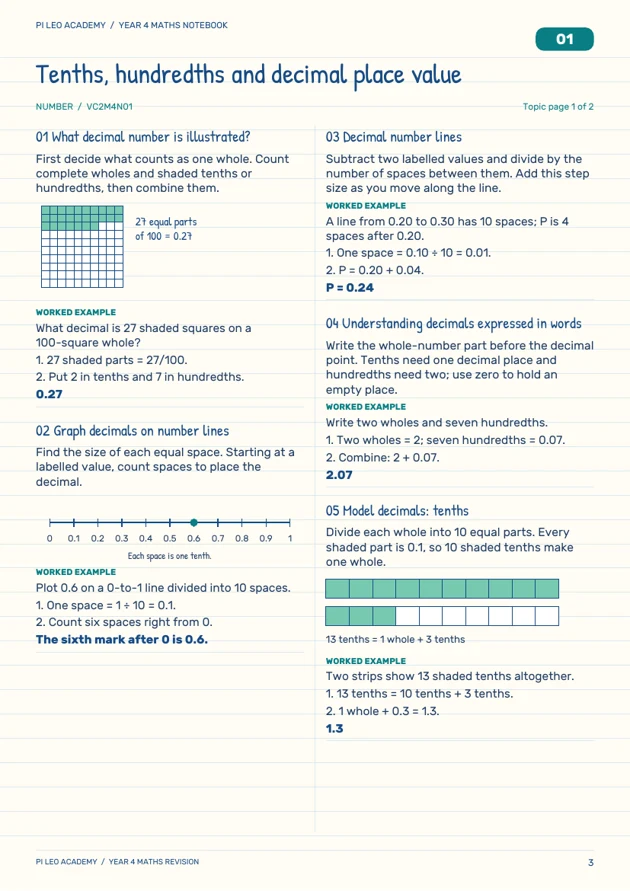
Tenths, hundredths and decimal place value
Read, represent and compare decimals using equal parts and place value.
- Easy
- 30
- Medium
- 30
- Hard
- 40
- Total
- 100
Victorian Curriculum F–10 Version 2.0
Build your skills one question at a time. Choose a topic, try a question and use the worked steps to understand your answer.
Printable revision sheets
26 topics across 54 pages, covering all 249 website subtopics. Revise with 270 short notes and worked examples, clear diagrams and easy-to-follow methods. Each topic takes no more than 3 pages.
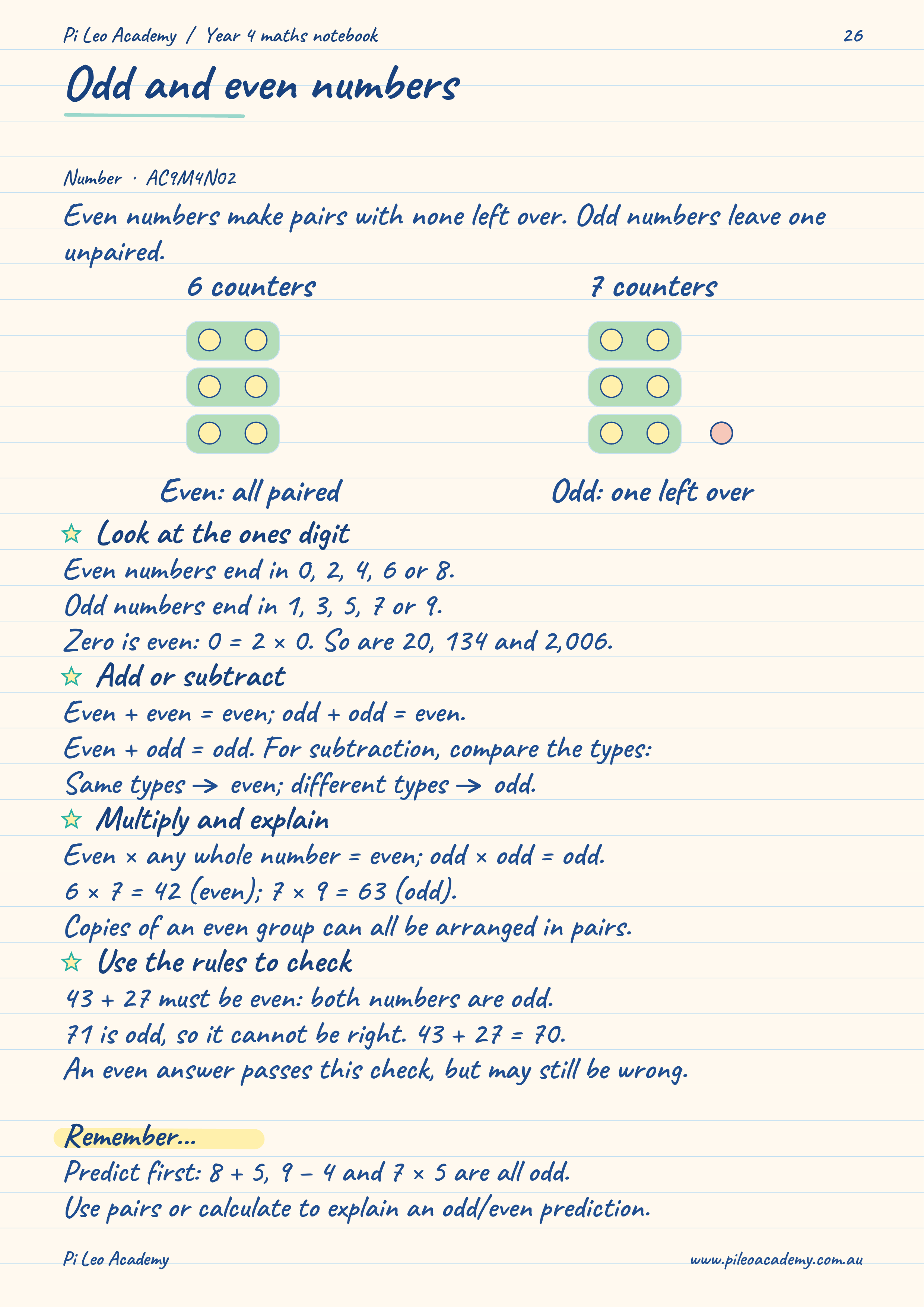
Expanded edition, published 2 November 2026. Each note uses at most 3 sentences, with a worked example underneath. Includes odd and even numbers from the original notebook and a linked contents page.
These original quick-reference sheets are from Edition 3. Download a one-page PDF or open its 300-DPI PNG preview; use the expanded book above for every study-note subtopic.
Includes the original 26-page book, bonus place-value sheet, curriculum coverage checklist, page previews, editable source files, licensed handwriting fonts and instructions for adapting the Edition 3 template.
View the curriculum coverage checklist (PDF)
Download the Edition 3 package (ZIP)Explore the topics
Read, represent and compare decimals using equal parts and place value.
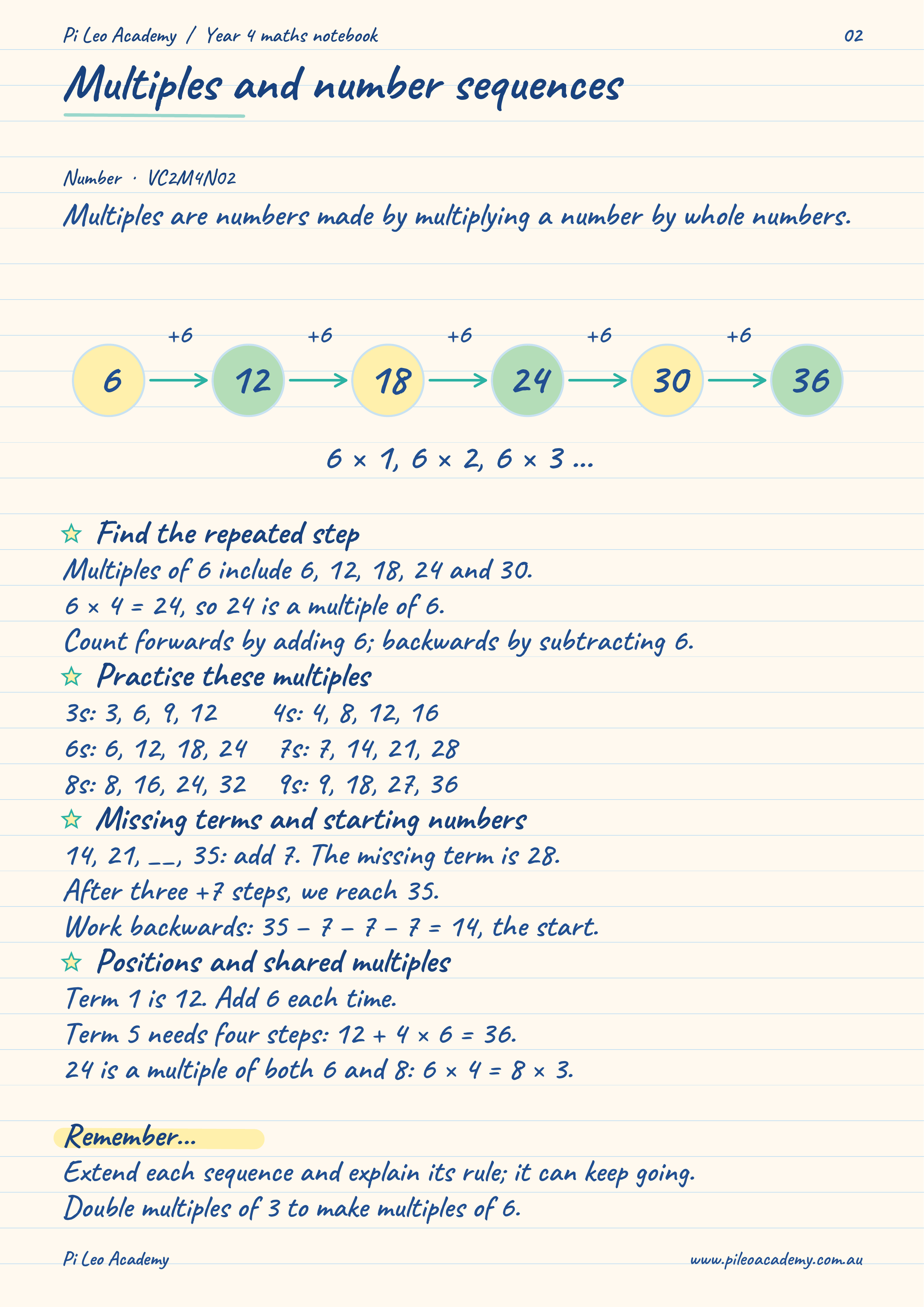
Use multiplication facts and constant steps to complete and explain patterns.
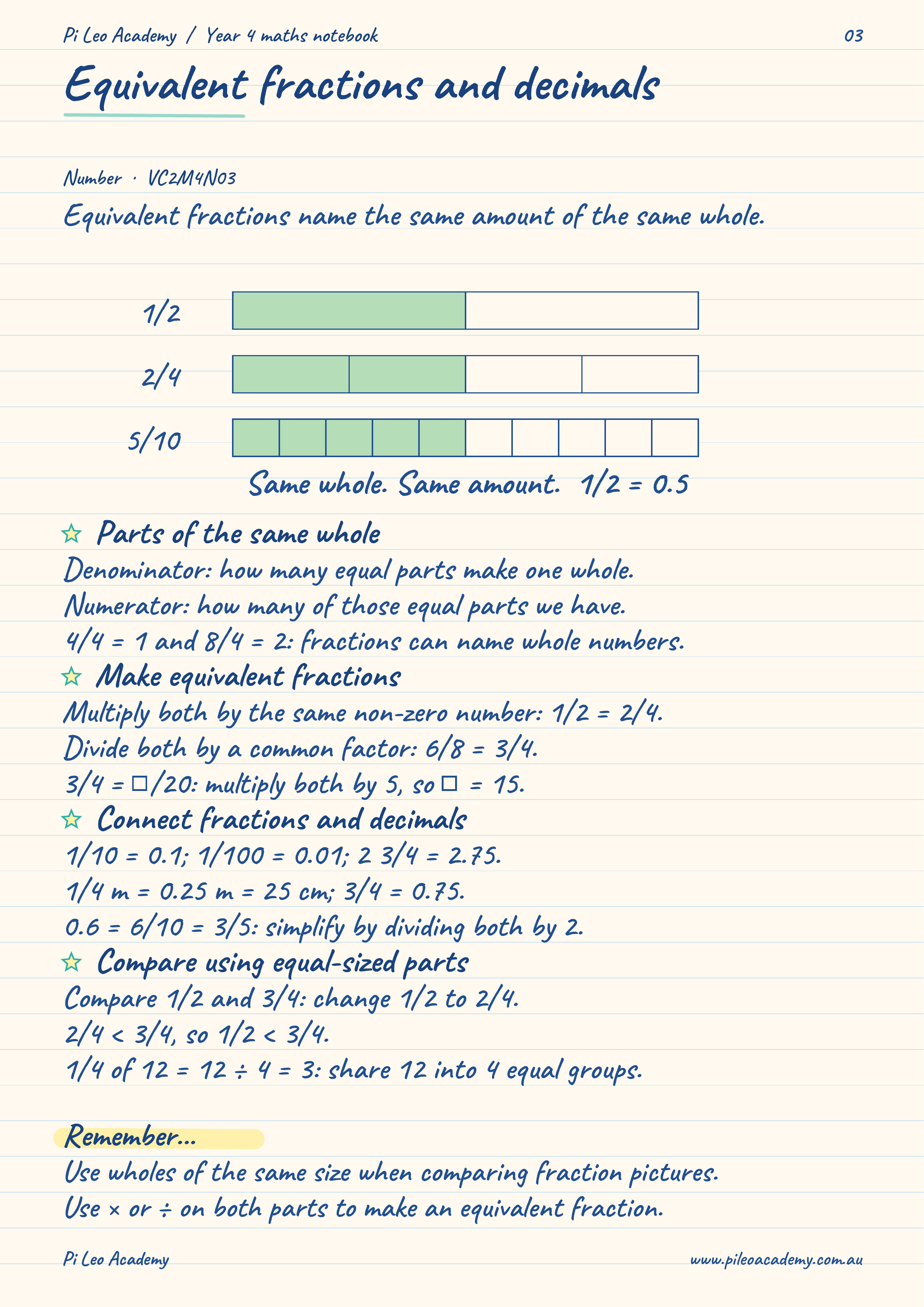
Find different fraction and decimal names for the same quantity.
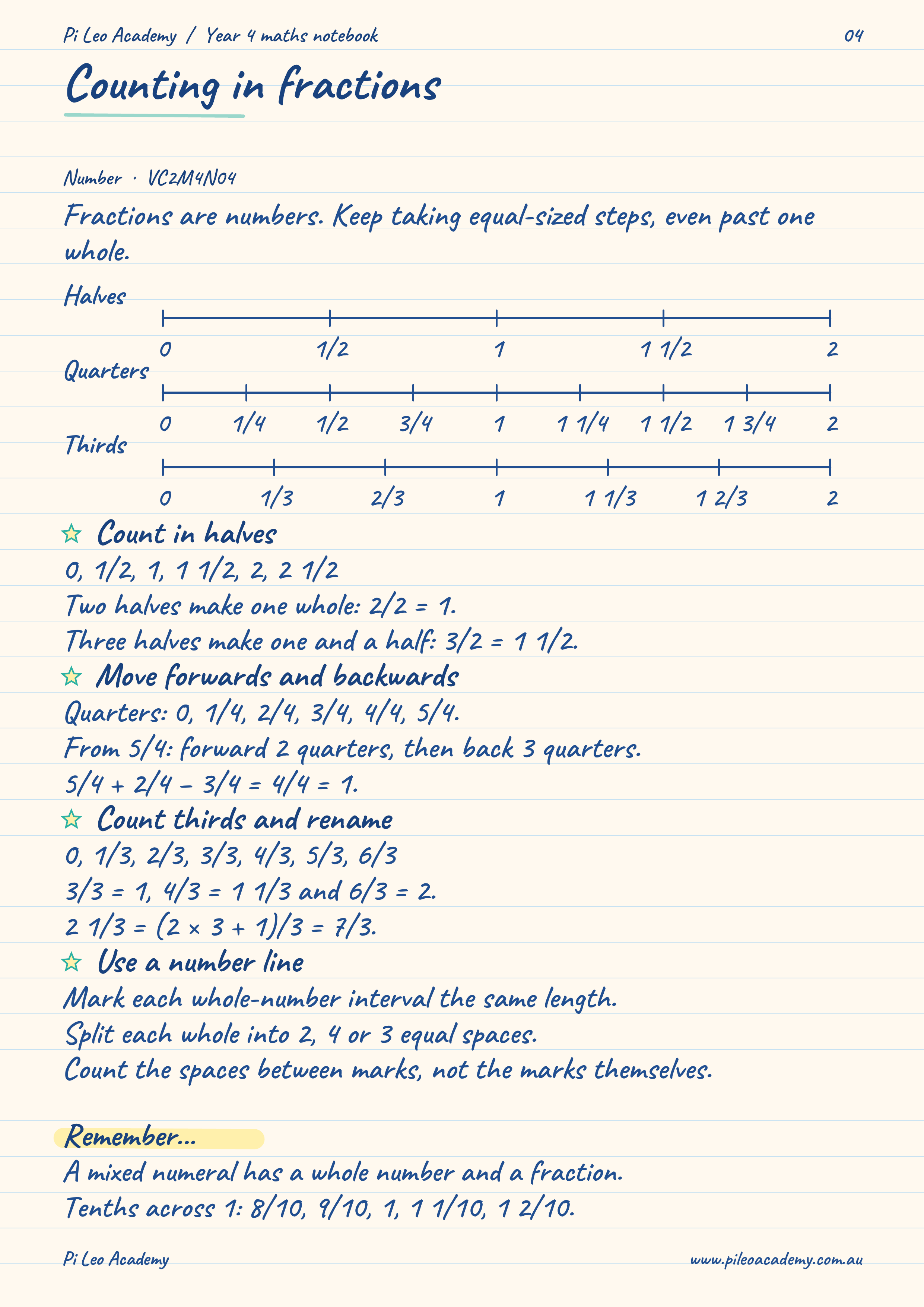
Count equal fraction steps and name positions beyond one whole.
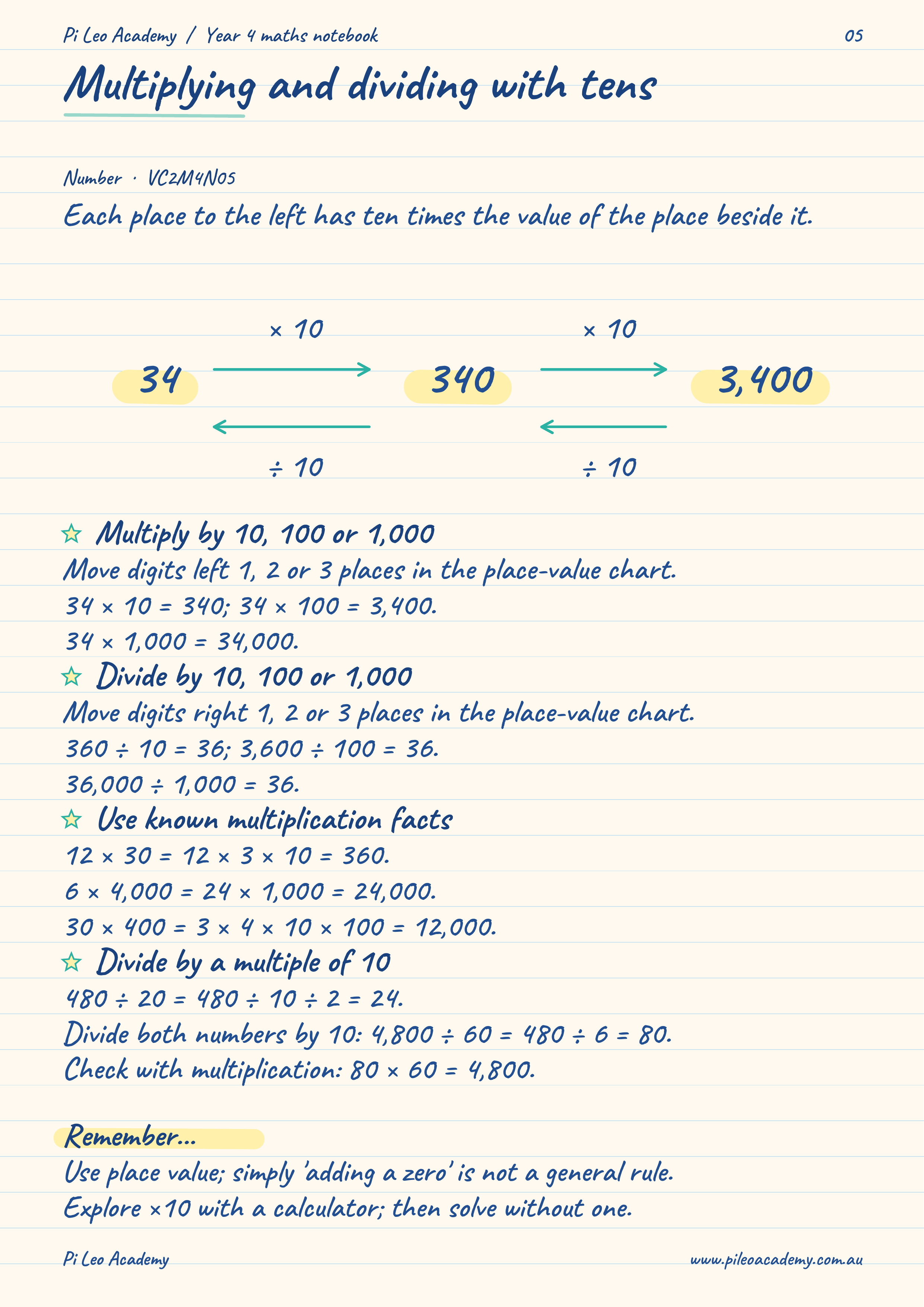
Use basic facts and place value to work with multiples and powers of ten.
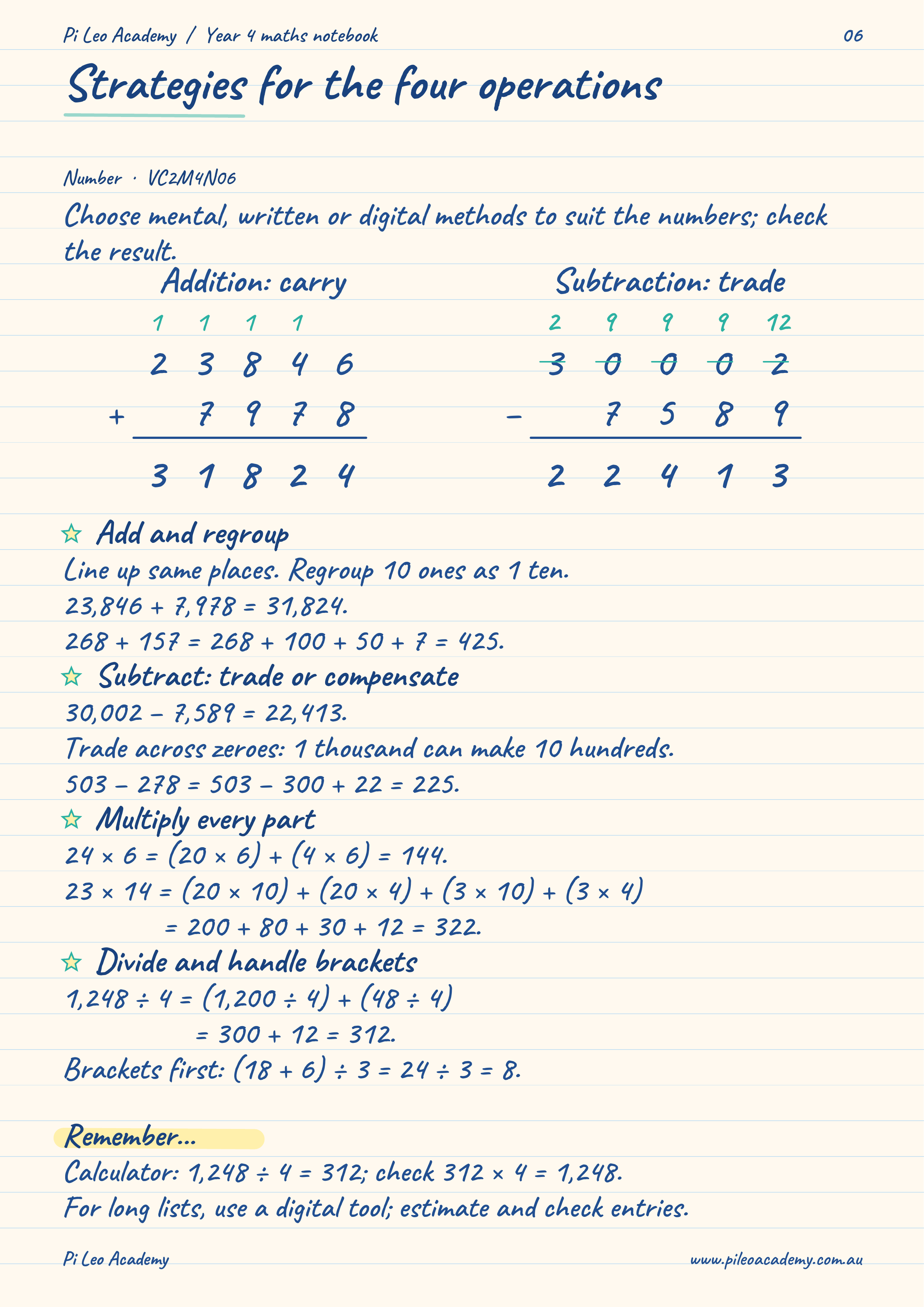
Choose clear methods for addition, subtraction, multiplication and division.
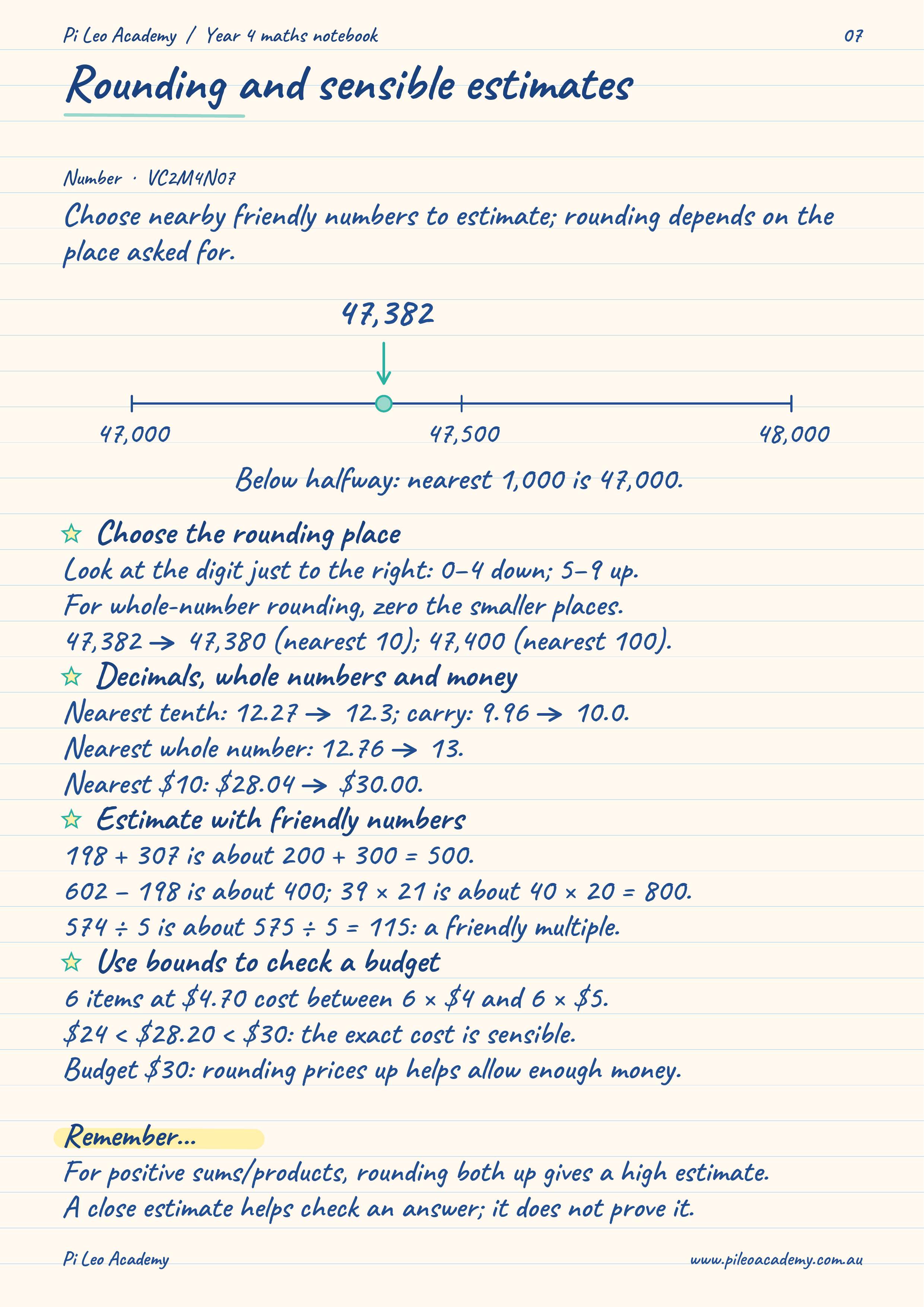
Use nearby values to estimate and check whether an answer is reasonable.
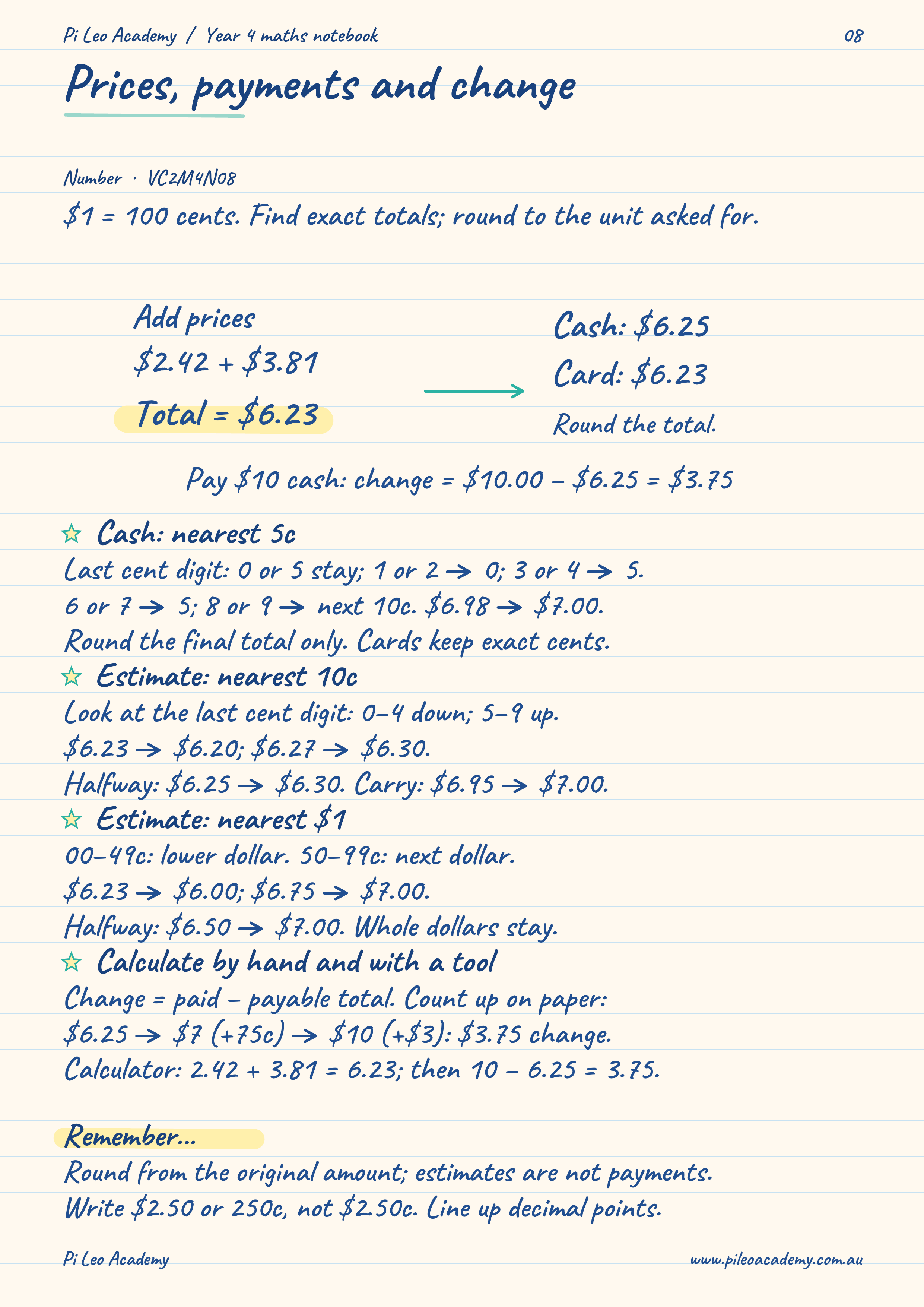
Add prices, compare costs and calculate change in dollars and cents.
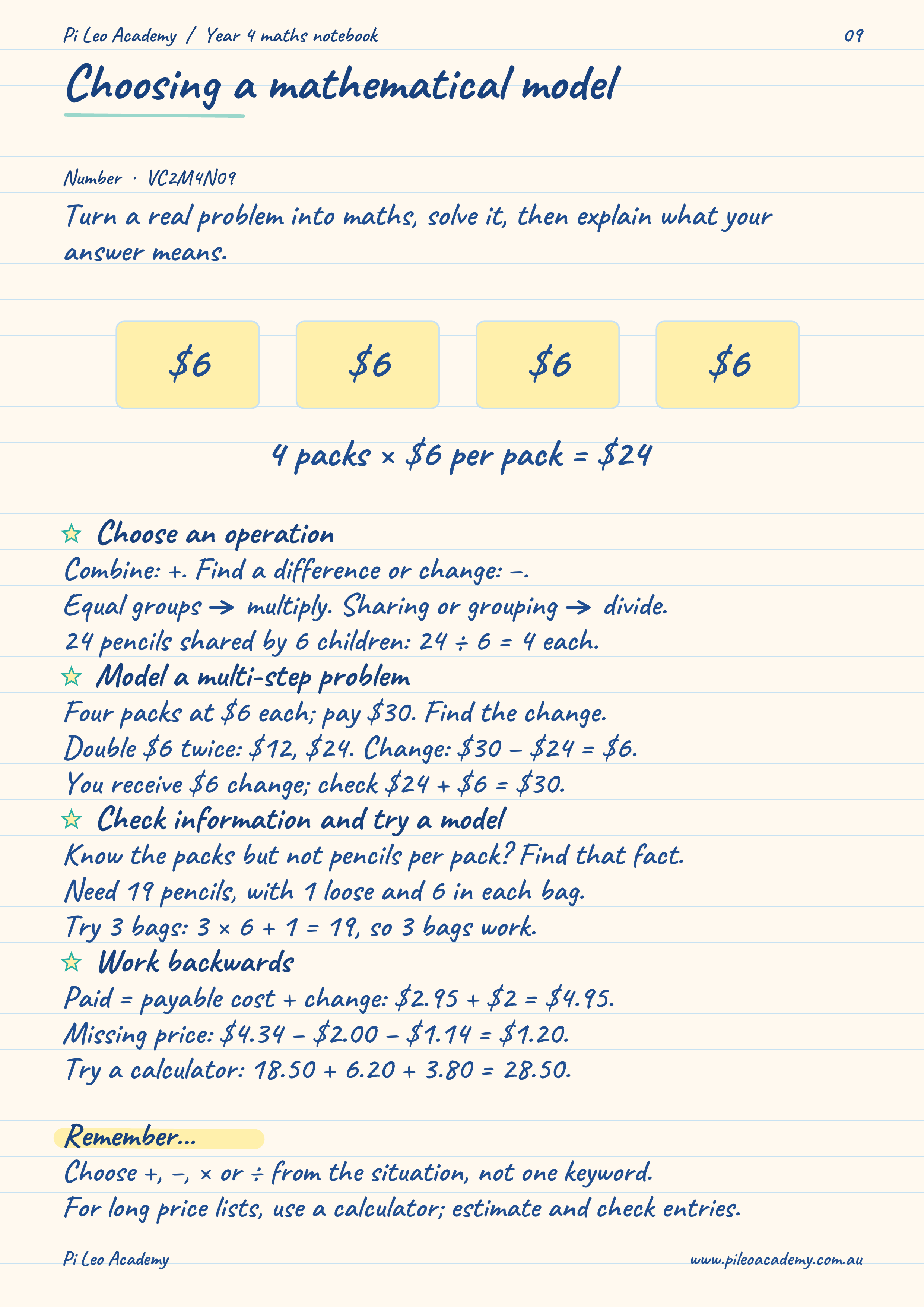
Choose the information and number sentence needed for a practical problem.
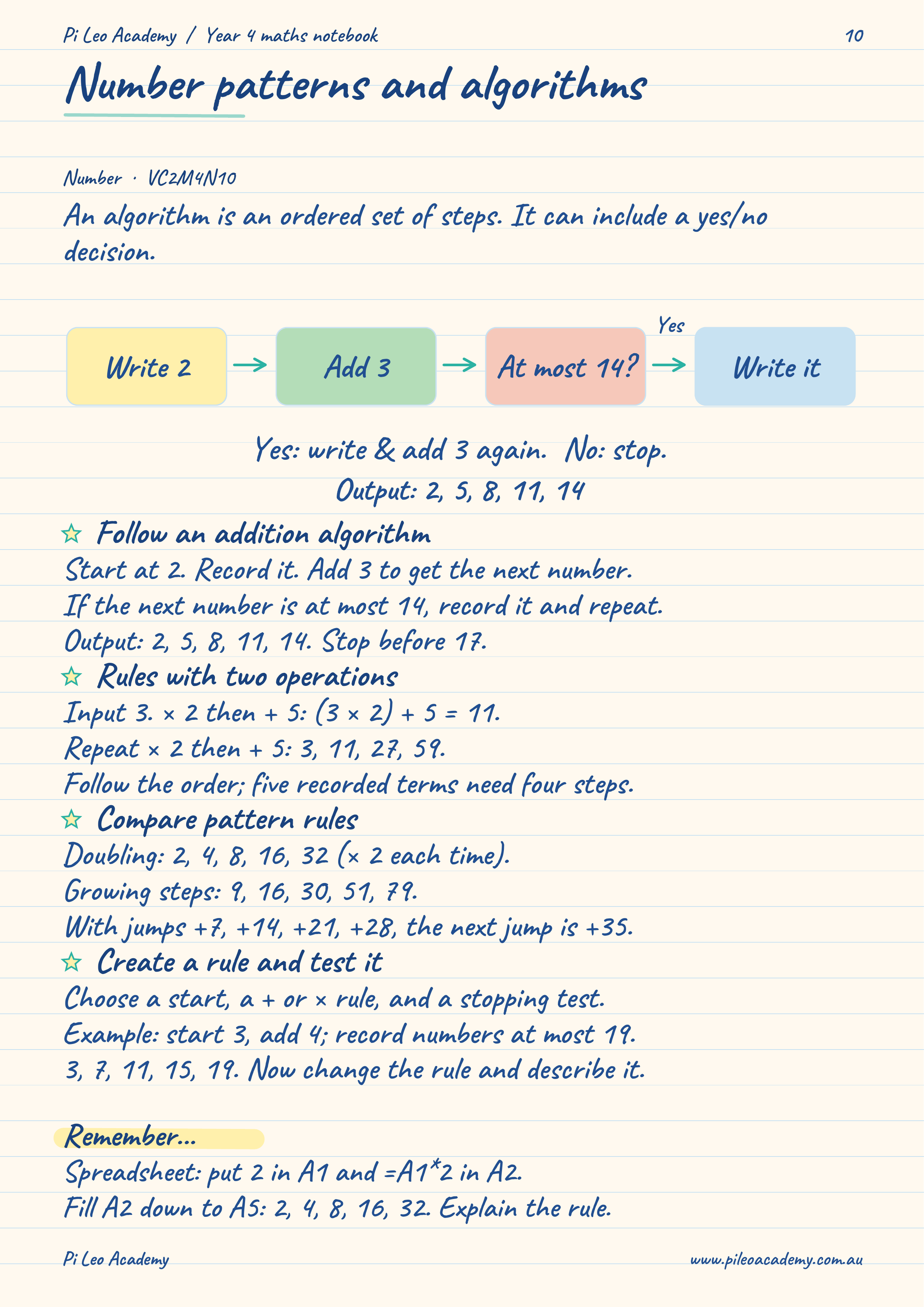
Follow rules, complete patterns and find the first step that does not fit.
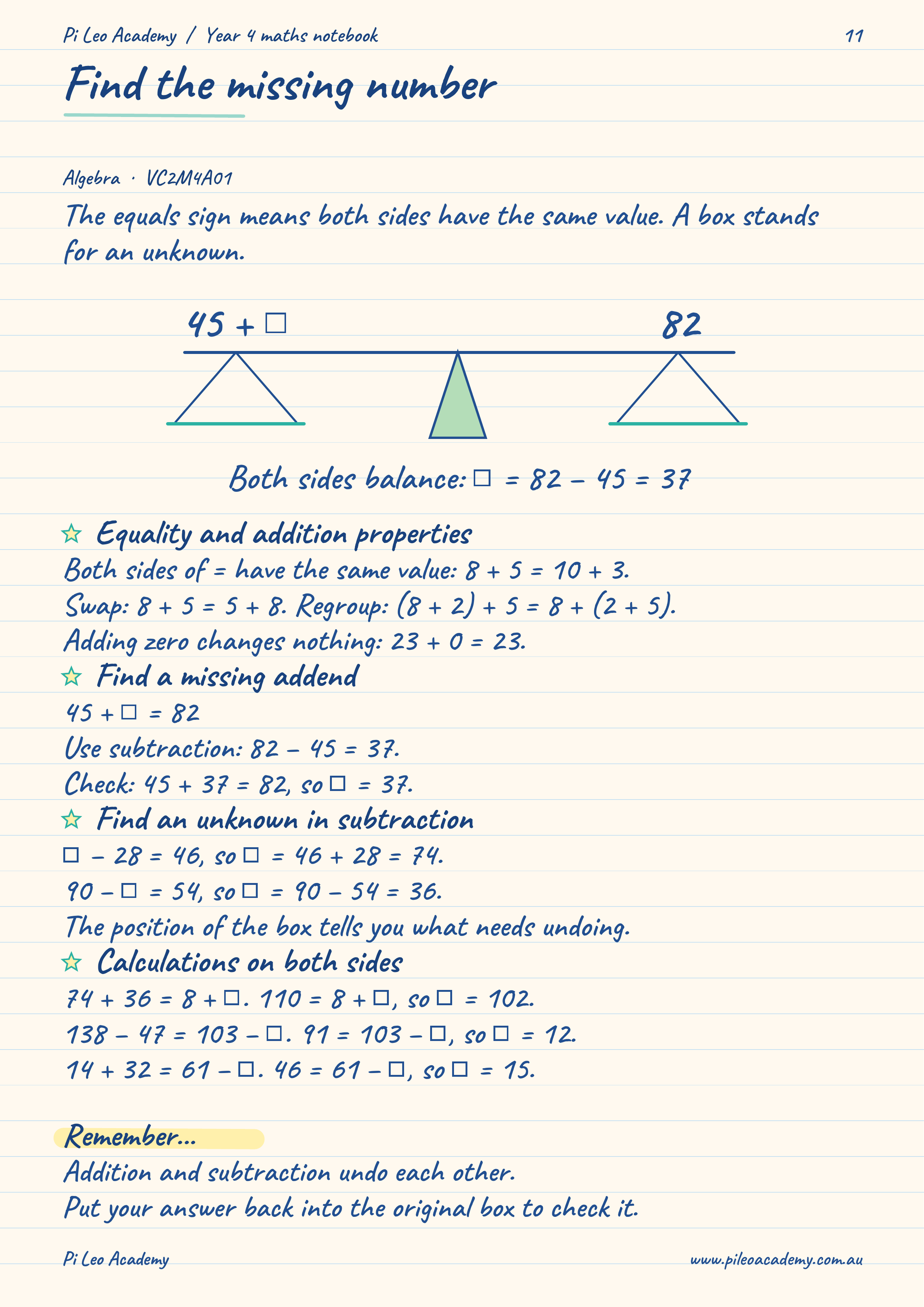
Keep both sides of an addition or subtraction equation equal.
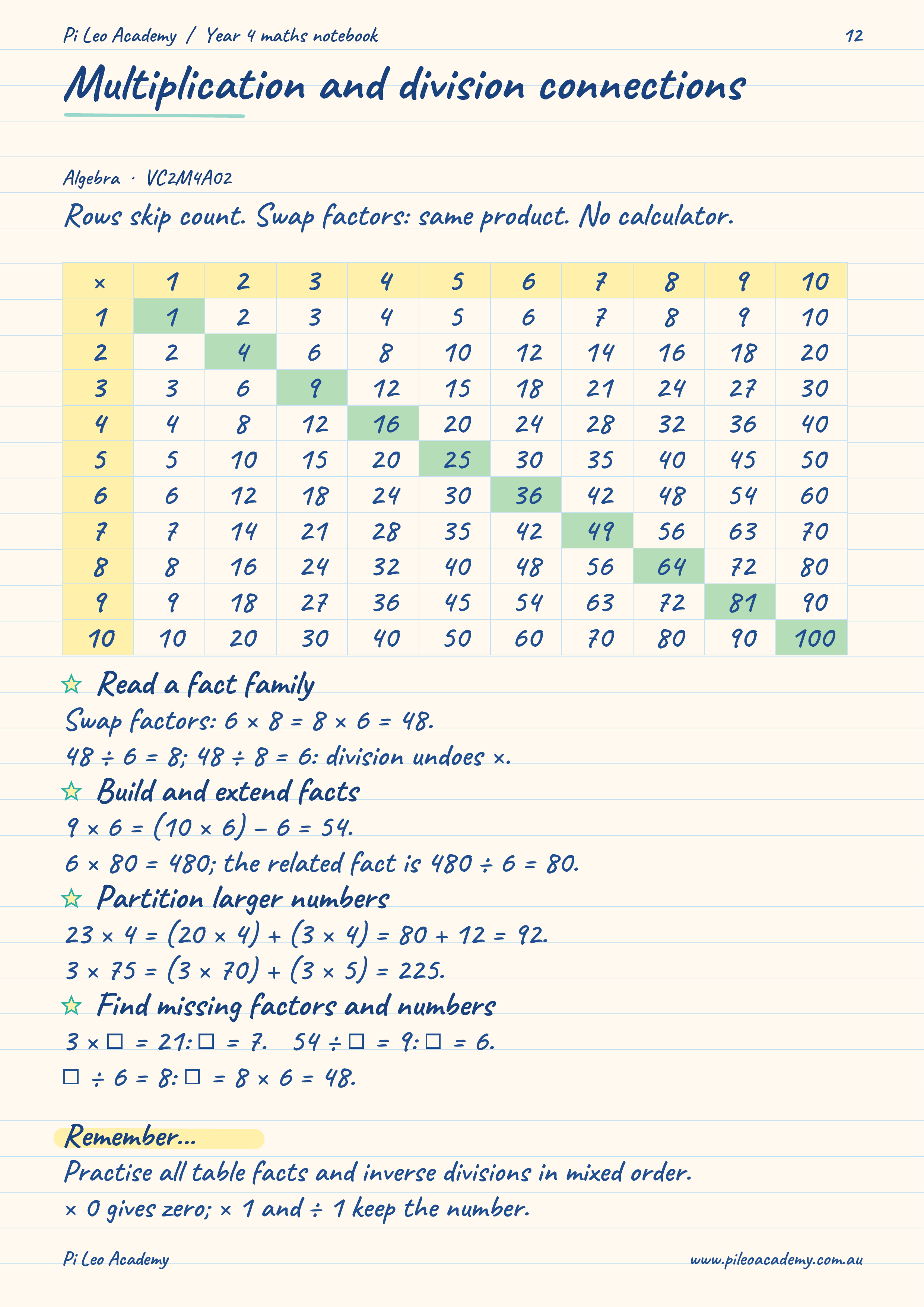
Use equal groups, arrays and related facts to solve problems.
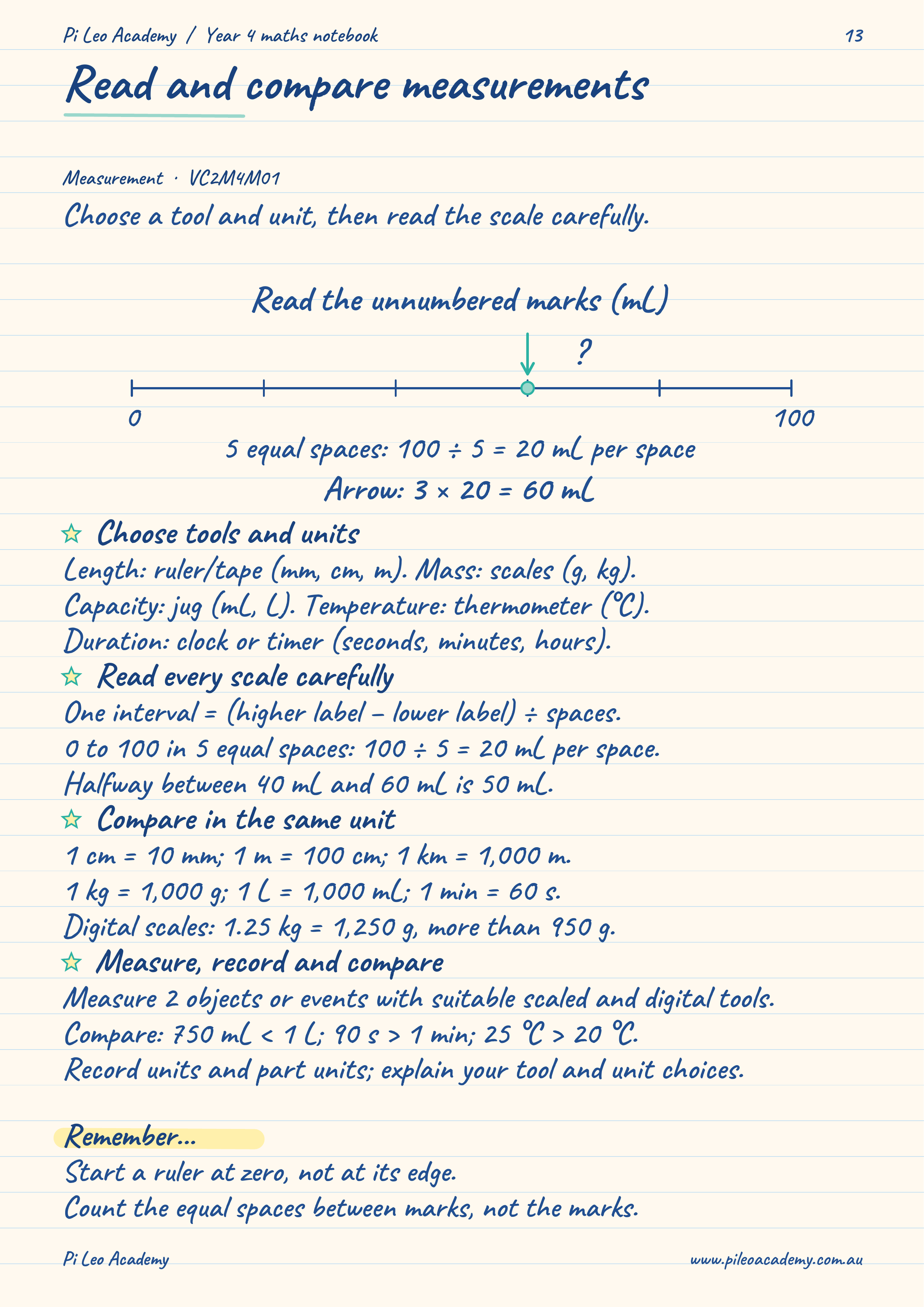
Read scales carefully and choose units that fit what you measure.
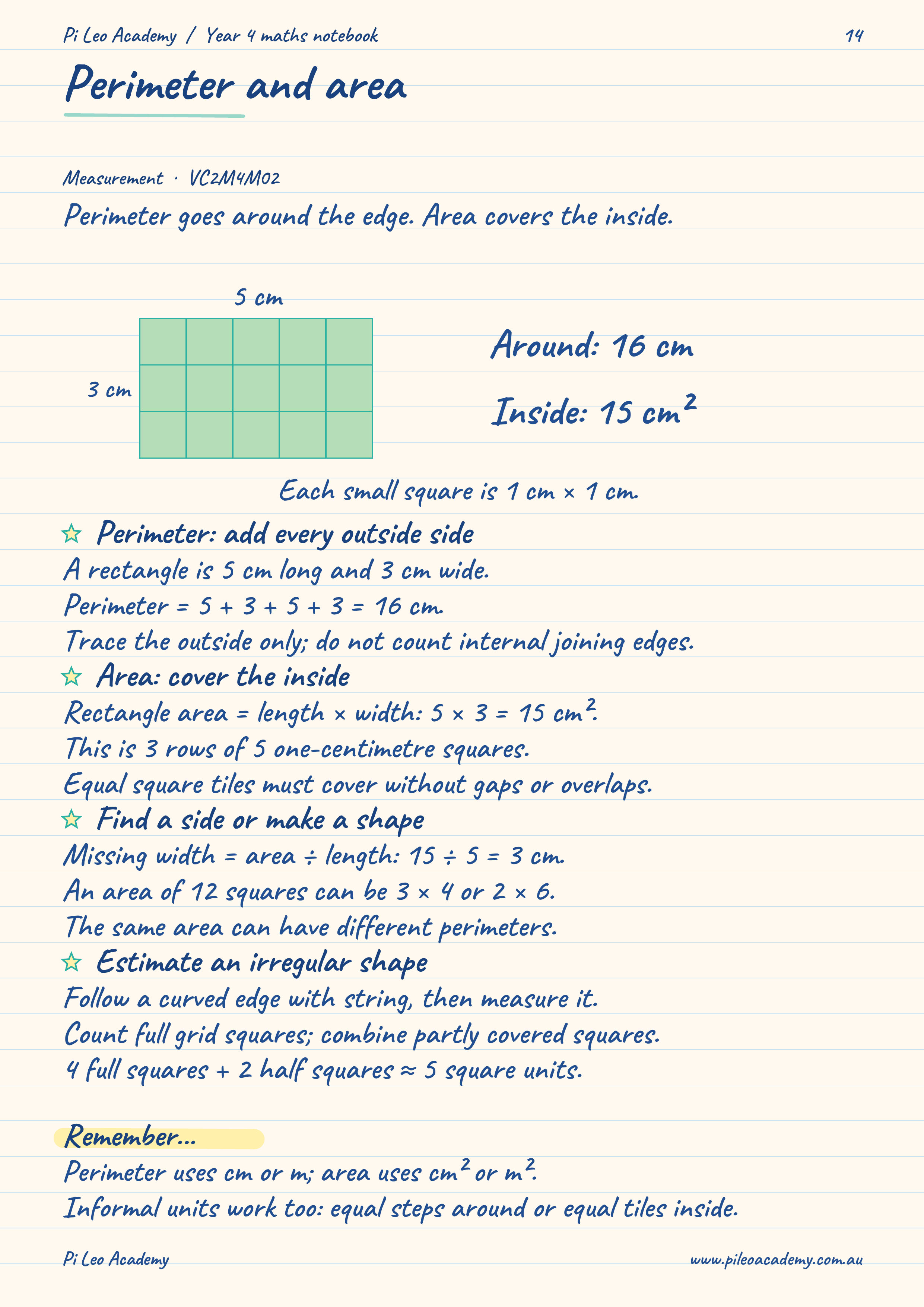
Measure the distance around a shape and the surface it covers.
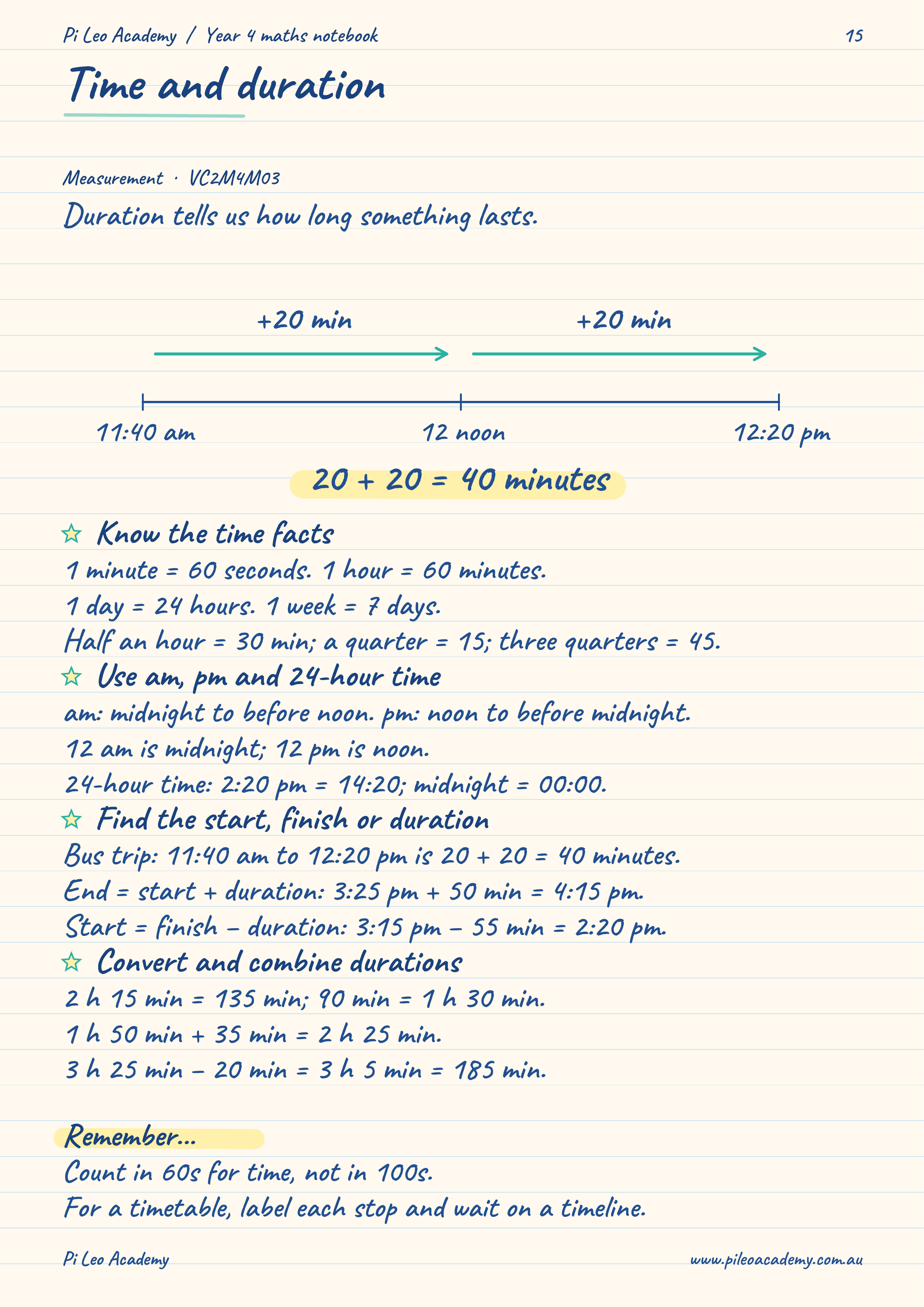
Work out elapsed time, finishing times and equivalent durations.
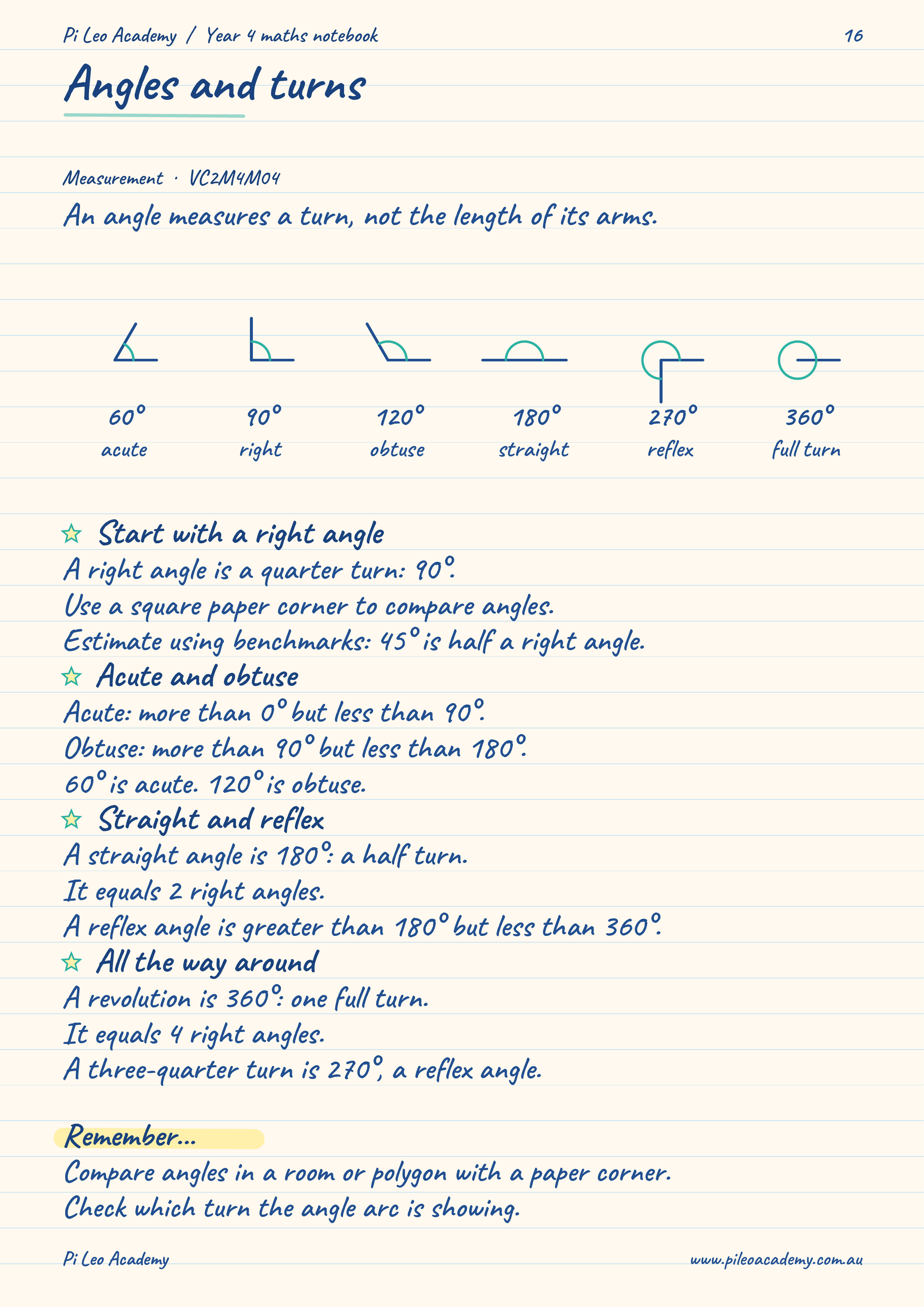
Compare turns with a right angle and describe their size.
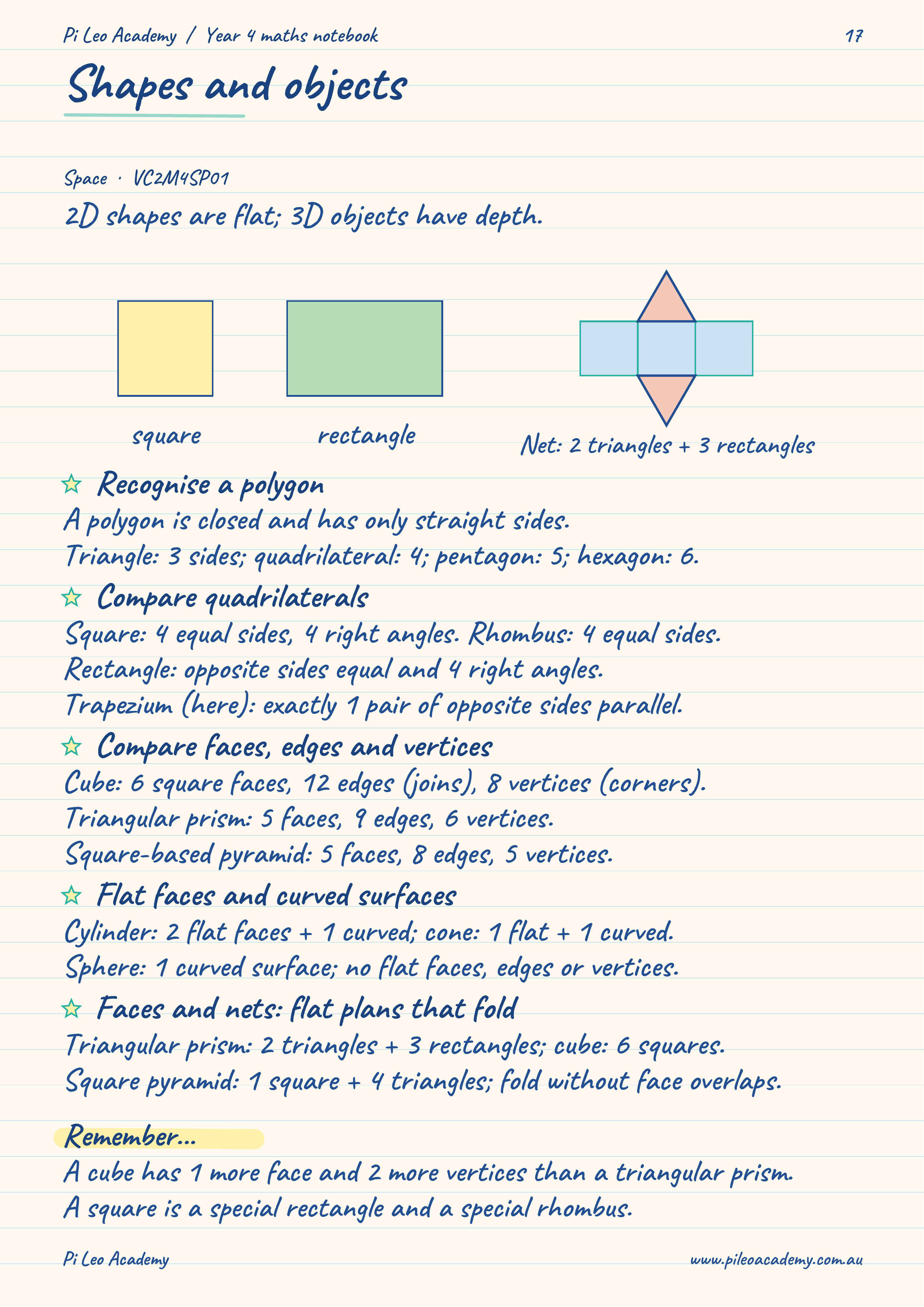
Use sides, angles, faces and vertices to describe and compare shapes.
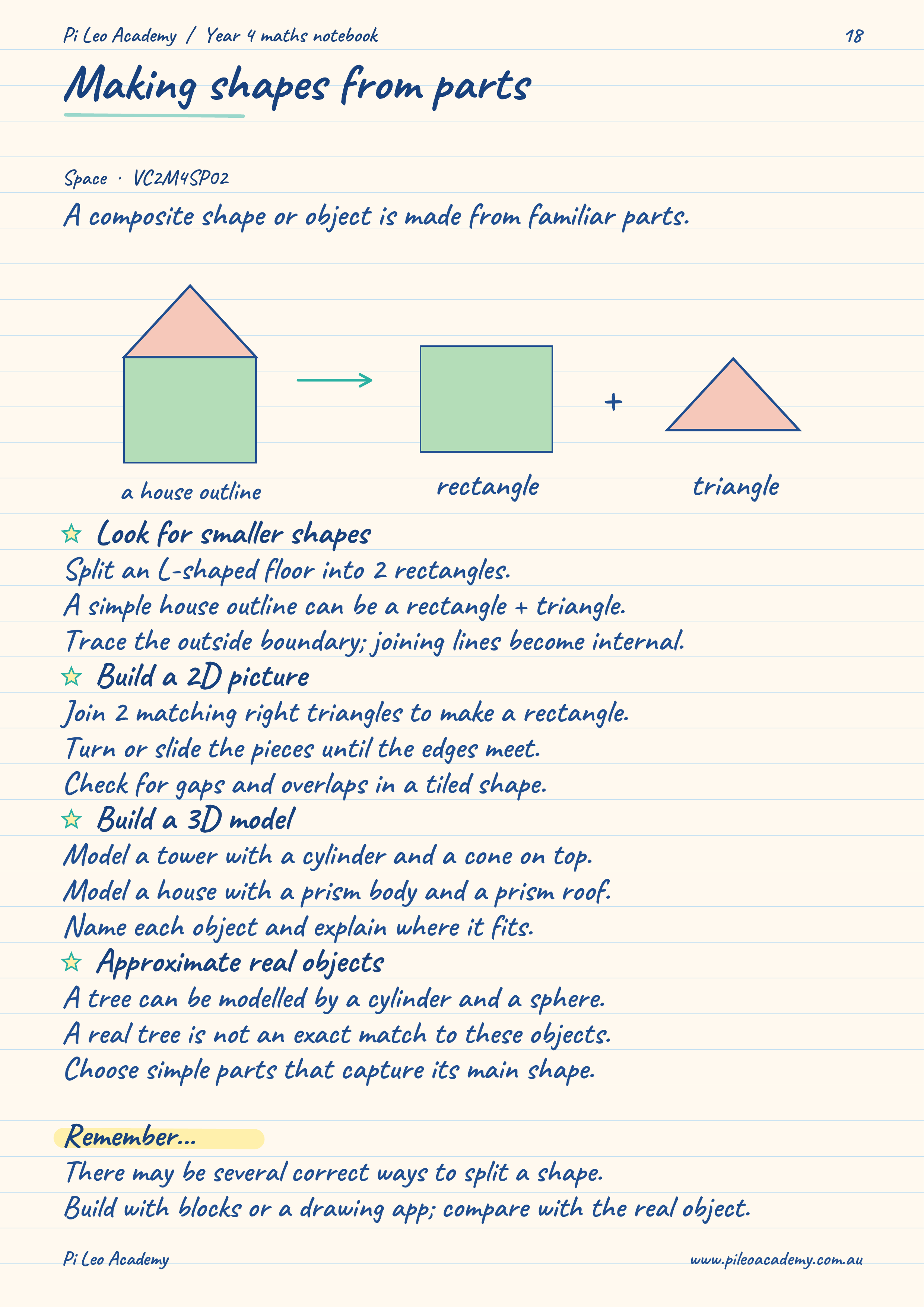
Join familiar shapes and objects to make a larger shape or model.
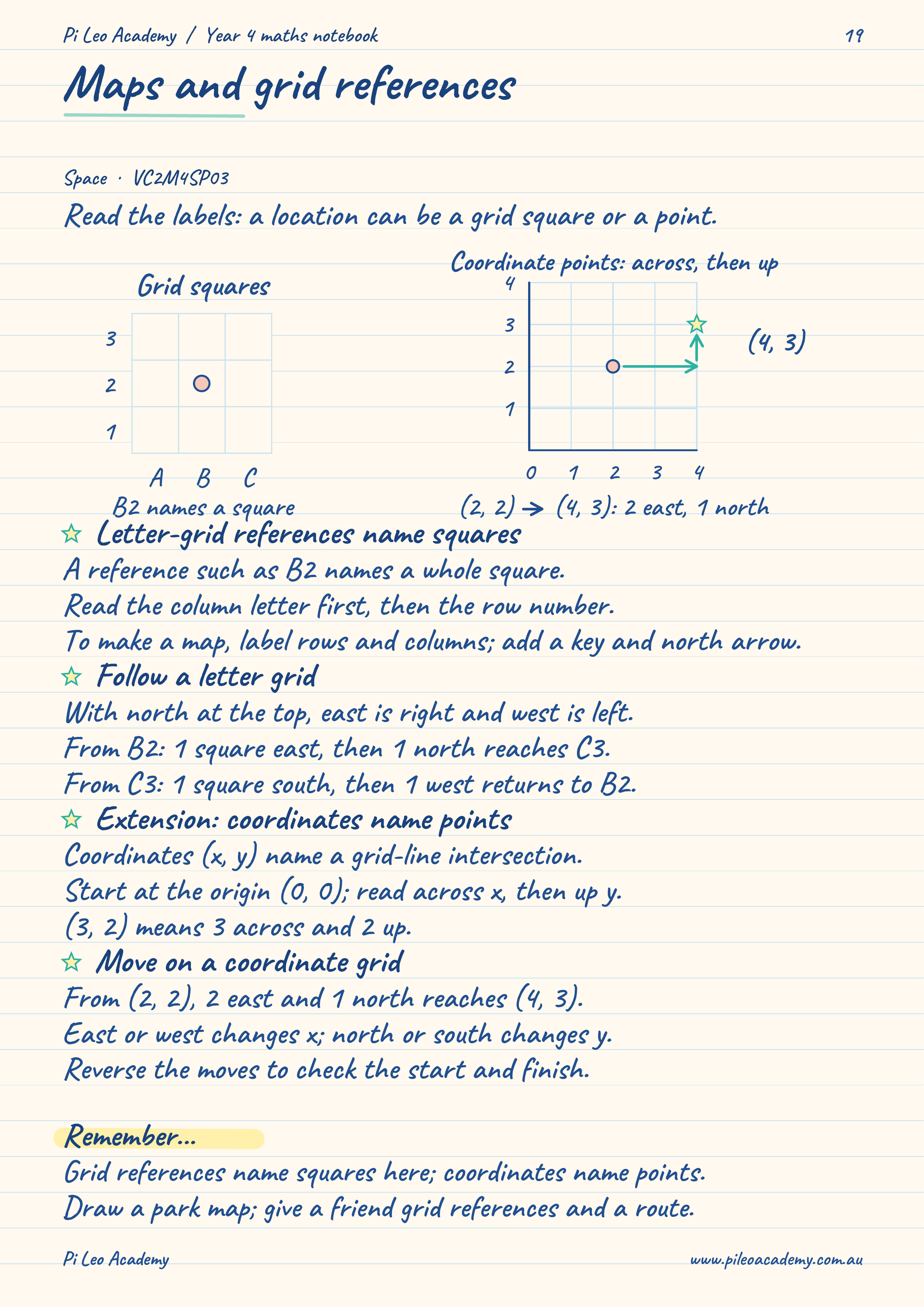
Read a labelled grid and follow directions one move at a time.
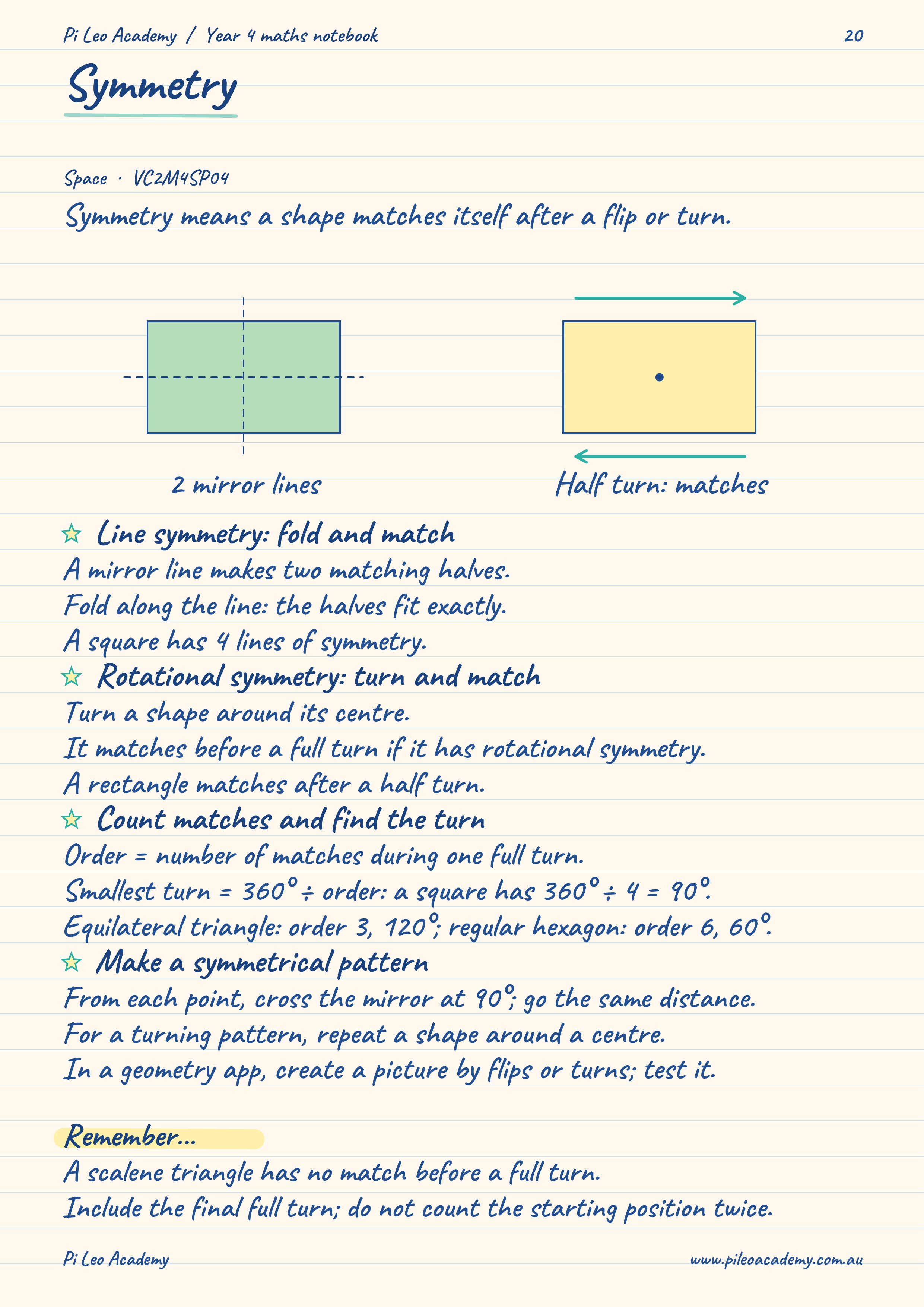
Look for exact matches after a reflection or a turn.
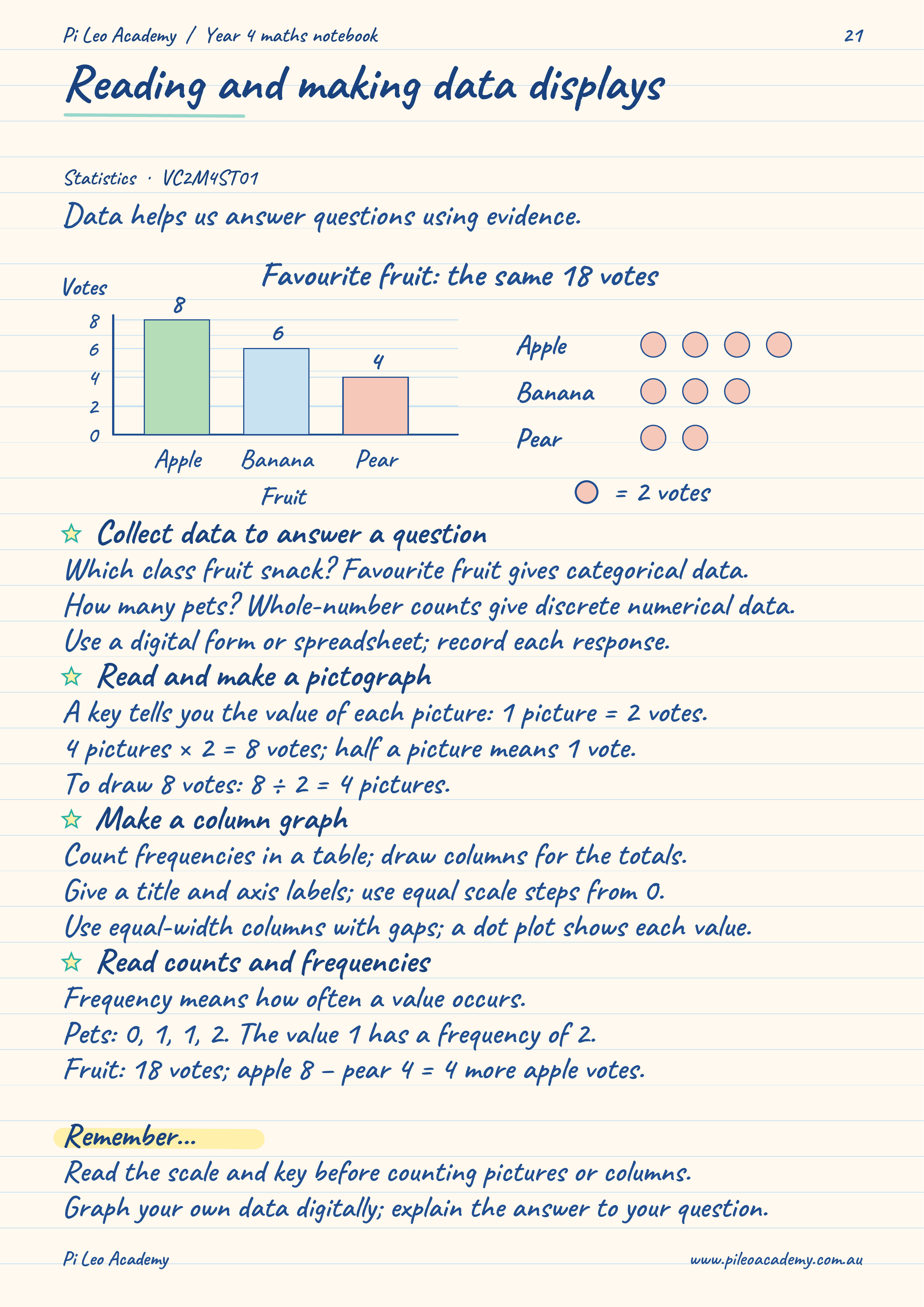
Use tables, pictographs and column graphs to answer questions about data.
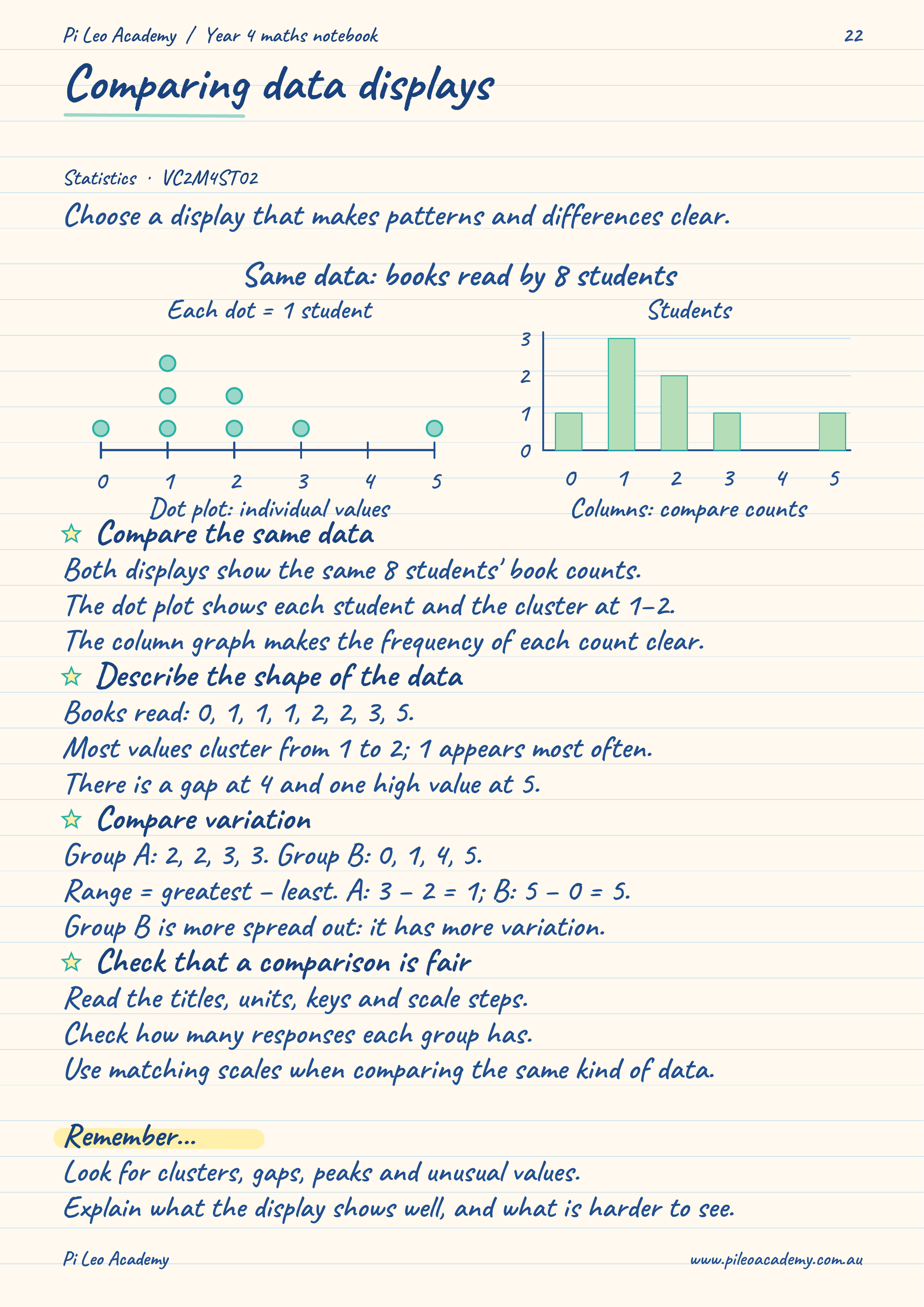
Choose displays that make two sets of data easy to compare fairly.
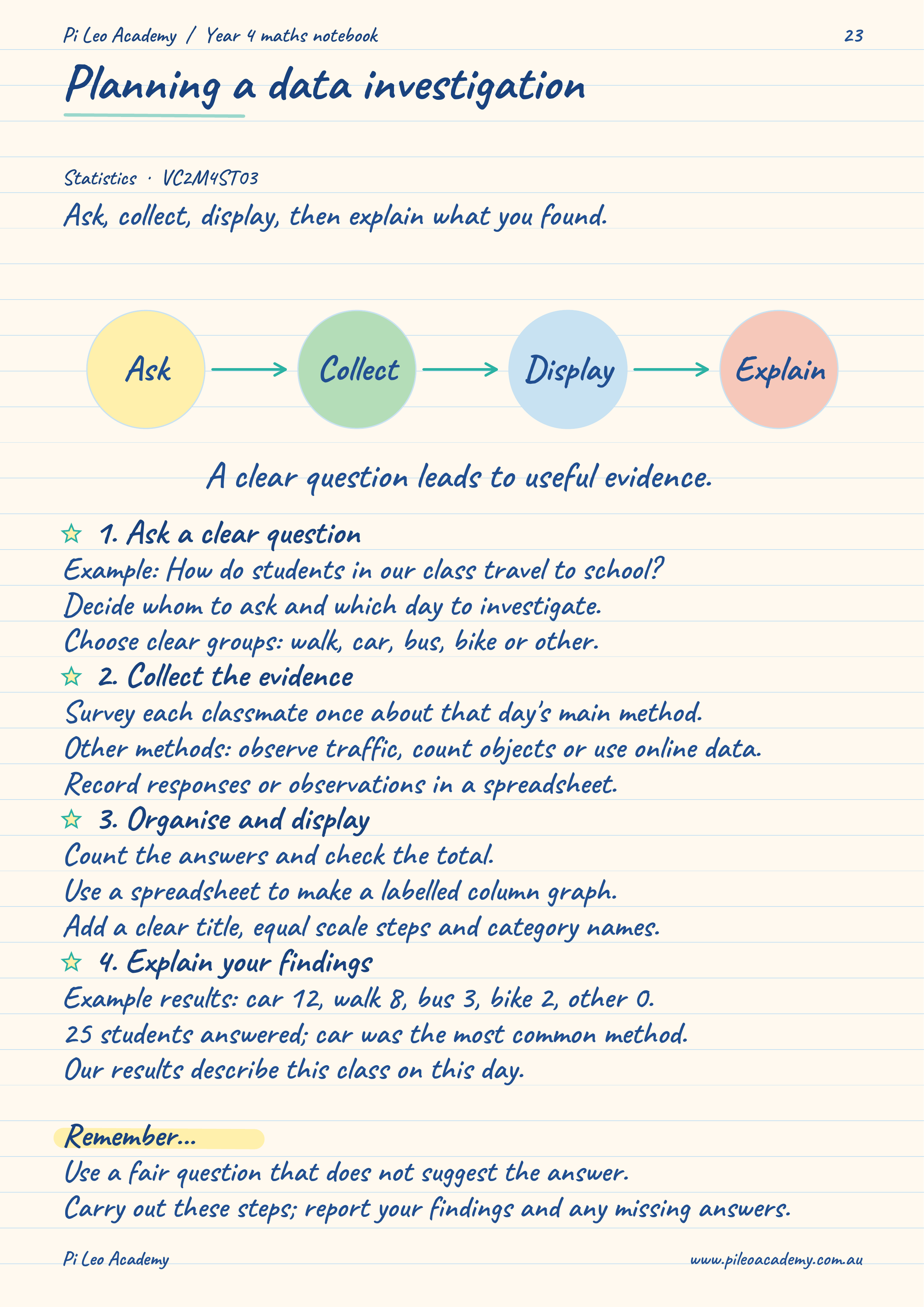
Ask a clear question, collect data consistently and explain what the results show.
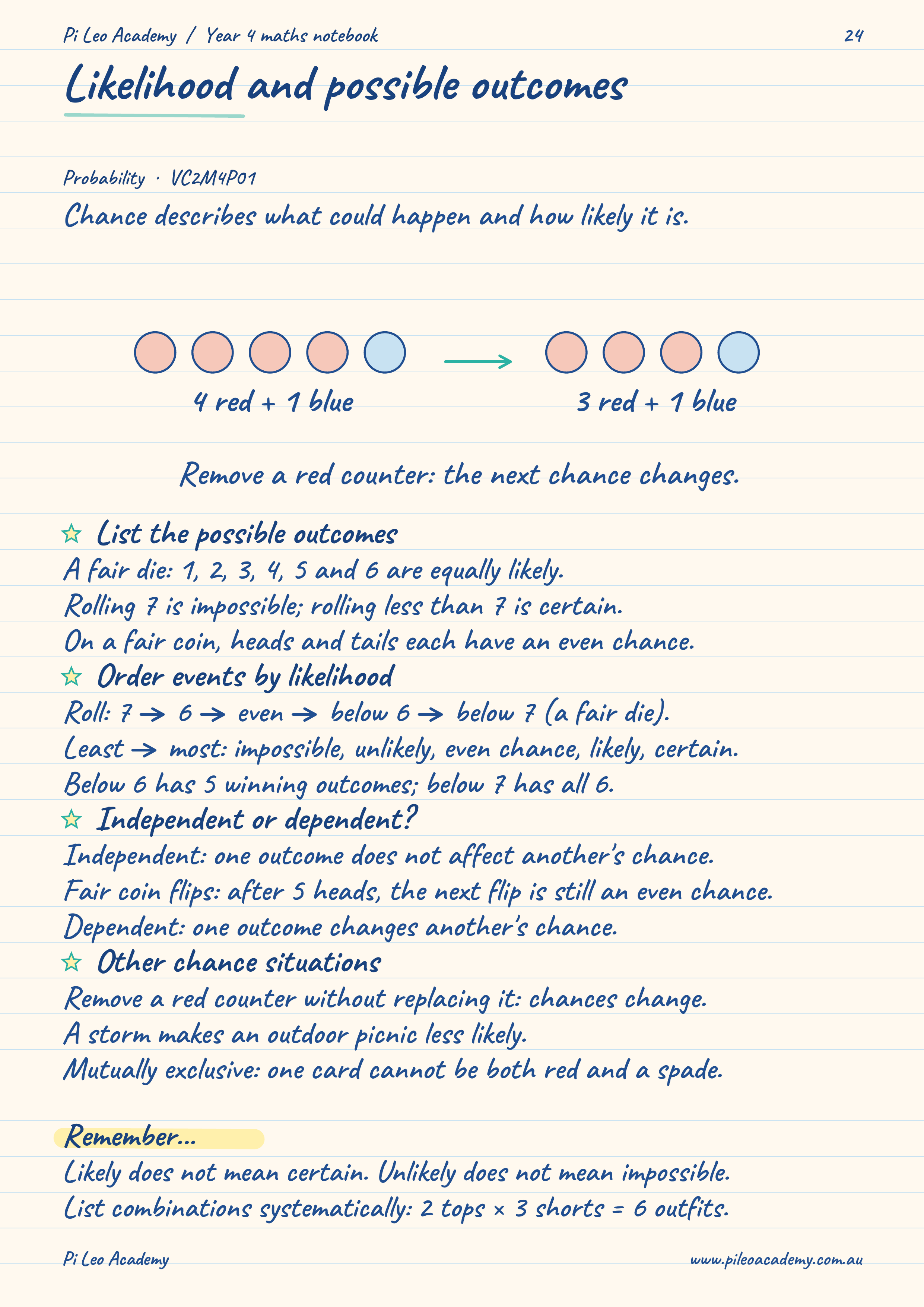
Compare chances using the outcomes that can actually happen.
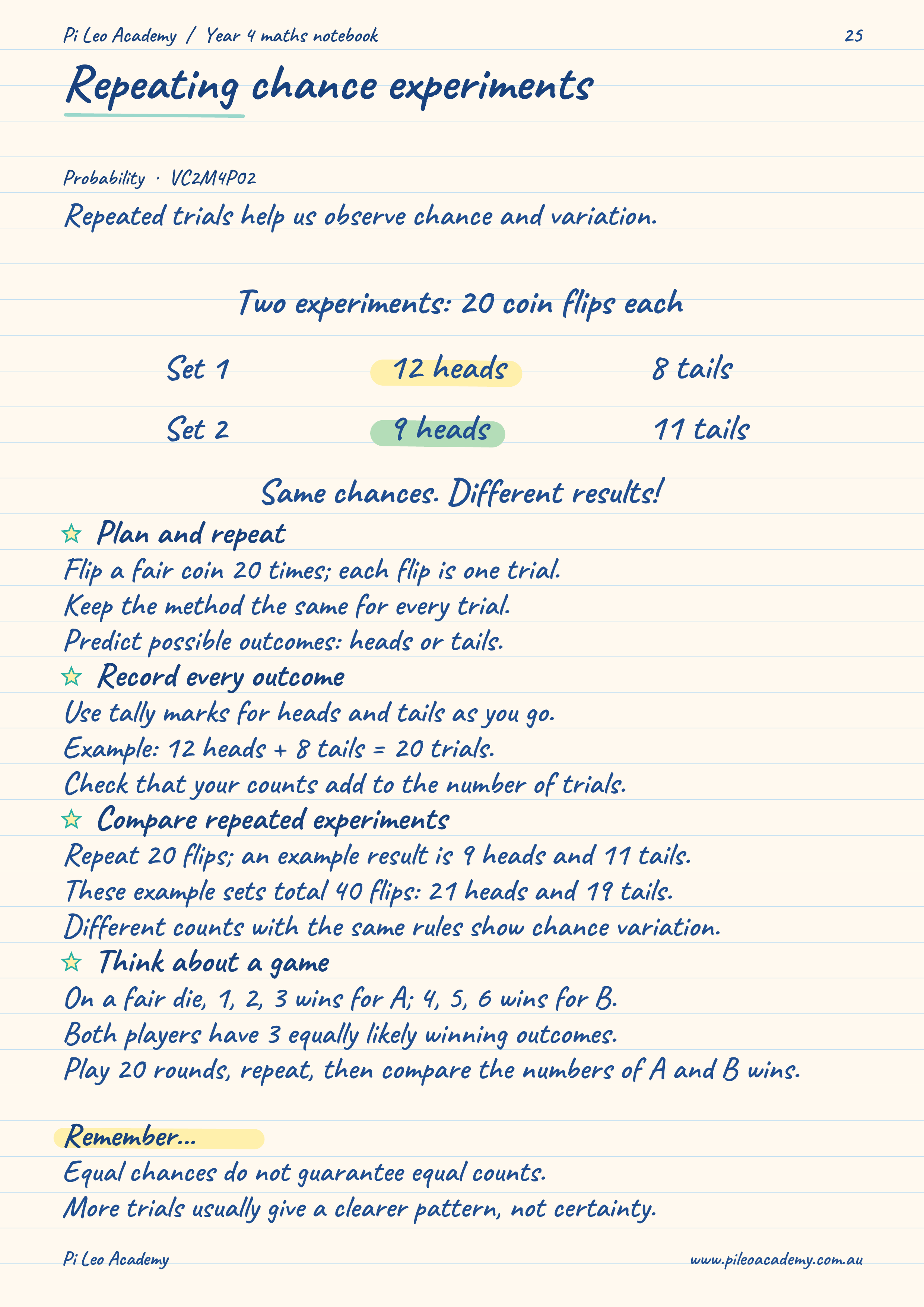
Record every result and compare what happened across sets of trials.